
February 3, 2026
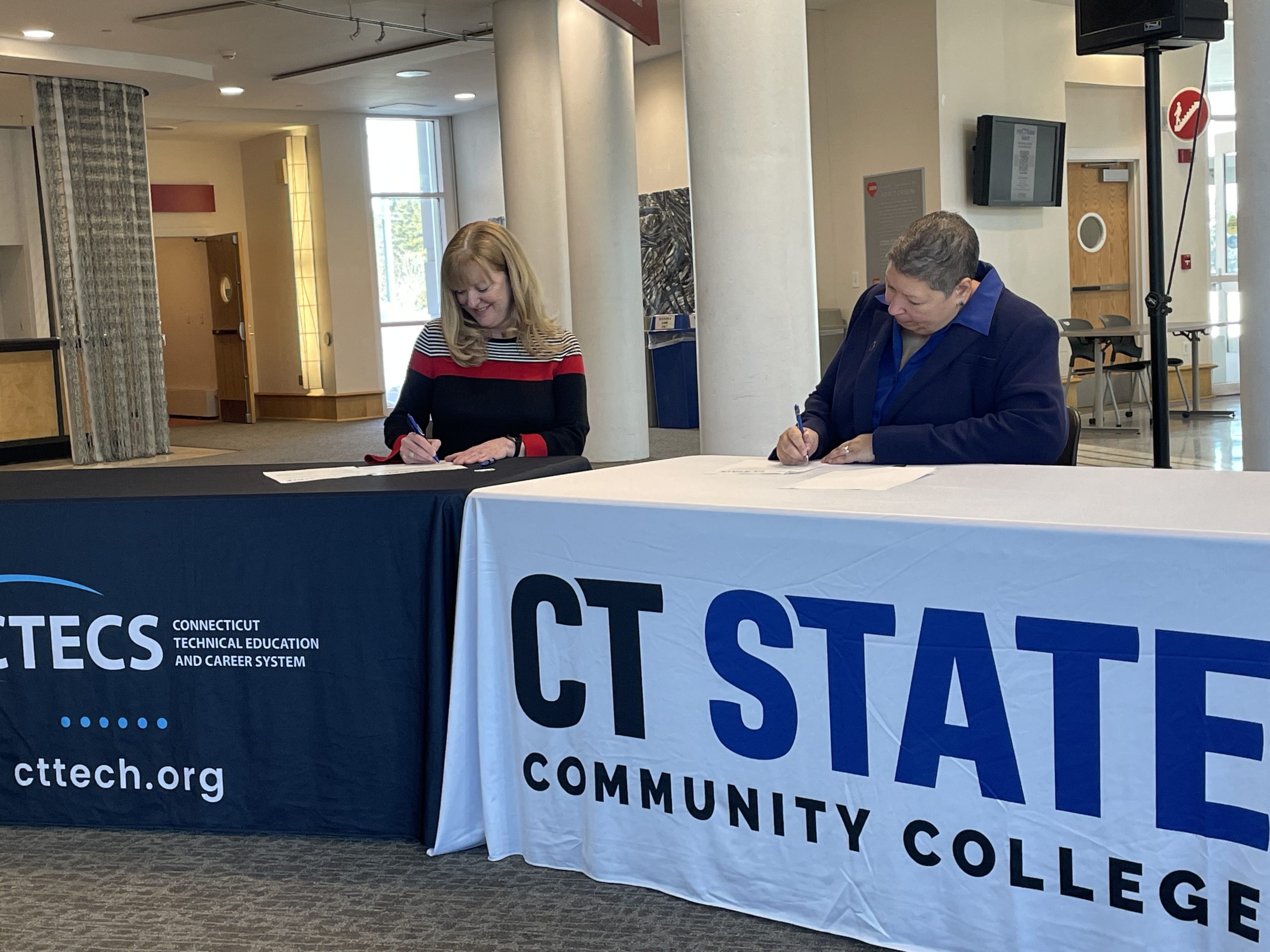
Connecticut State Community College (CT State) and the Connecticut Technical Education and Career System (CTECS) today officially signed a landmark partnership designed to strengthen pathways from technical high schools to community college. The agreement expands dual enrollment opportunities, aligns curricula, and prepares students for the high-demand employment needs of Connecticut’s workforce.
The signing event, held at CT State Manchester, featured CT State and CTECS leadership, as well as grade 10 CTECS culinary students, the first cohort to participate under the partnership.
The partnership provides a seamless pipeline for students to earn college credit while still in high school through dual enrollment courses or concurrent enrollment courses. Students may also receive credit for prior learning through articulated high school courses, certifications, and industry-recognized credentials.
Program alignment will focus on high-demand fields where both CT State and CTECS already offer strong pathways, including health care, information technology, manufacturing, and hospitality. Each program will also include partnerships with local, regional, and state employers and workforce investment boards to ensure pathways reflect current labor market needs and provide students with hands-on experiences such as job shadowing, guest speakers, resume reviews, mock interviews, and internships or field experiences.
The program also offers exposure to CT State business and entrepreneurship programs, helping students develop skills to launch new small businesses and contribute to Connecticut’s economic growth.
“Through this partnership with CT State, we are strengthening the bridge between technical education, higher education, and Connecticut’s workforce,” said Dr. Alice Pritchard, Executive Director of CTECS. “This agreement ensures students gain college credit for the technical skills they’ve achieved in their trade programs, as well as increase their industry exposure and readiness to succeed in high-demand fields that are critical to the state’s economy.”
“The agreement between Connecticut State Community College and the Connecticut Technical Education and Career System builds on the progress Connecticut has made in intentionally connecting learning to the high-demand employment needs of Connecticut’s workforce,” said Education Commissioner Charlene M. Russell-Tucker. “Through sustained state investments and collaboration across K–12, higher education, and workforce partners, Connecticut has significantly expanded access to dual credit, industry-recognized credentials, and high-quality career pathways—particularly for students historically underrepresented in postsecondary success. By aligning technical high school programs with CT State and the needs of our employers, this agreement builds on that momentum and ensures more students graduate with college credit, in-demand skills, and a clear pathway to meaningful careers that strengthen Connecticut’s economy.”
“This partnership is about meeting students where they are and giving them the skills, credentials, and confidence to succeed in high-demand careers,” said Dr. Kelli-Marie Vallieres, Chief Workforce Officer, Office of Workforce Strategy. “By aligning technical education, higher education, and industry, we’re creating clear, accelerated pathways that prepare students for real careers and ensure our workforce is ready for the jobs of today and tomorrow.”
“CT State is proud to deepen our long-standing work with high schools across Connecticut through this expanded partnership with CTECS,” said Dr. Christina Royal, interim president of CT State Community College. “By increasing opportunities for dual enrollment, hands-on learning, and industry-recognized credentials, we are giving even more students a clear and affordable pathway from high school to college, into high-demand careers. This collaboration enhances our state’s talent pipeline and supports the innovation and entrepreneurial skills students need to meet employer needs and contribute to Connecticut’s continued economic growth.”
“This landmark partnership marks a significant step forward in expanding college and career pathways for Connecticut’s technical high school students,” said Dr. John Maduko, interim chancellor of the Connecticut State Colleges and Universities. “By strengthening the bridge from technical high schools to CT State Community College, expanding dual enrollment opportunities, and aligning curricula with the needs of today’s workforce, we are empowering students to continue their education and confidently step into high-demand careers that will drive the state’s economic future.”
About CT State Community College:
Connecticut State Community College is the largest community college in the Northeast and fourth largest open enrollment public two-year college in the country, serving 65,000 students across 12 main campuses.
Students can apply once and take classes at any of CT State’s campuses — CT State Asnuntuck (Enfield), Capital (Hartford), Gateway (New Haven and North Haven), Housatonic (Bridgeport), Manchester, Middlesex (Middletown and Meriden), Naugatuck Valley (Waterbury and Danbury), Northwestern (Winsted), Norwalk, Quinebaug Valley (Danielson and Willimantic), Three Rivers (Norwich), and Tunxis (Farmington). Open houses are held each spring and fall, and campus tours are available year-round. Visit ctstate.edu for more.
About CTECS:
Through exemplary trade and academic programming, the Connecticut Technical Education and Career System (CTECS) prepares high school students and adult learners to meet the skilled workforce needs of Connecticut employers. CTECS operates 17 diploma-granting technical high schools, one technical education center for grades 11 and 12 and adult learners, and two aviation maintenance technician training programs. CTECS serves approximately 11,700 full-time high school students in over 30 Career and Technical Education (CTE) programs. In addition, over 3,000 adult learners take part in day courses, and evening apprenticeship and extension courses. All CTECS academic and CTE curriculum are designed with relevant, 21st-century employability skills required by business and industry.